Does (Immigration) Framing Influence Public Opinion?
New paper in Political Communication: media framing in complex information environments
A major editorial shift at Germany’s largest tabloid drastically changed its immigration coverage — but readers’ attitudes remained unchanged. Framing effects appear most impactful during the early formation of opinions.
My paper The Impact of Media Framing in Complex Information Environments is now available open access at Political Communication.
Journalists are often assumed to influence public opinion by focusing on certain aspects of political issues and events. While experimental research shows that such emphasis framing affects political attitudes, it is unclear how these findings translate to complex, real-world environments.
I focus on a unique case involving the largest German tabloid, Bild. In 2017 the chief editor — who had hosted a refugee family — resigned over allegations of sexual harassment. His successor would severely change the outlet’s migration coverage.


Analyzing ~2.5 million news articles, I show that this editorial change heavily affected the tabloid’s immigration coverage: Bild increased their attention to crime frames in their migration coverage by 42%, compared to other daily newspapers.
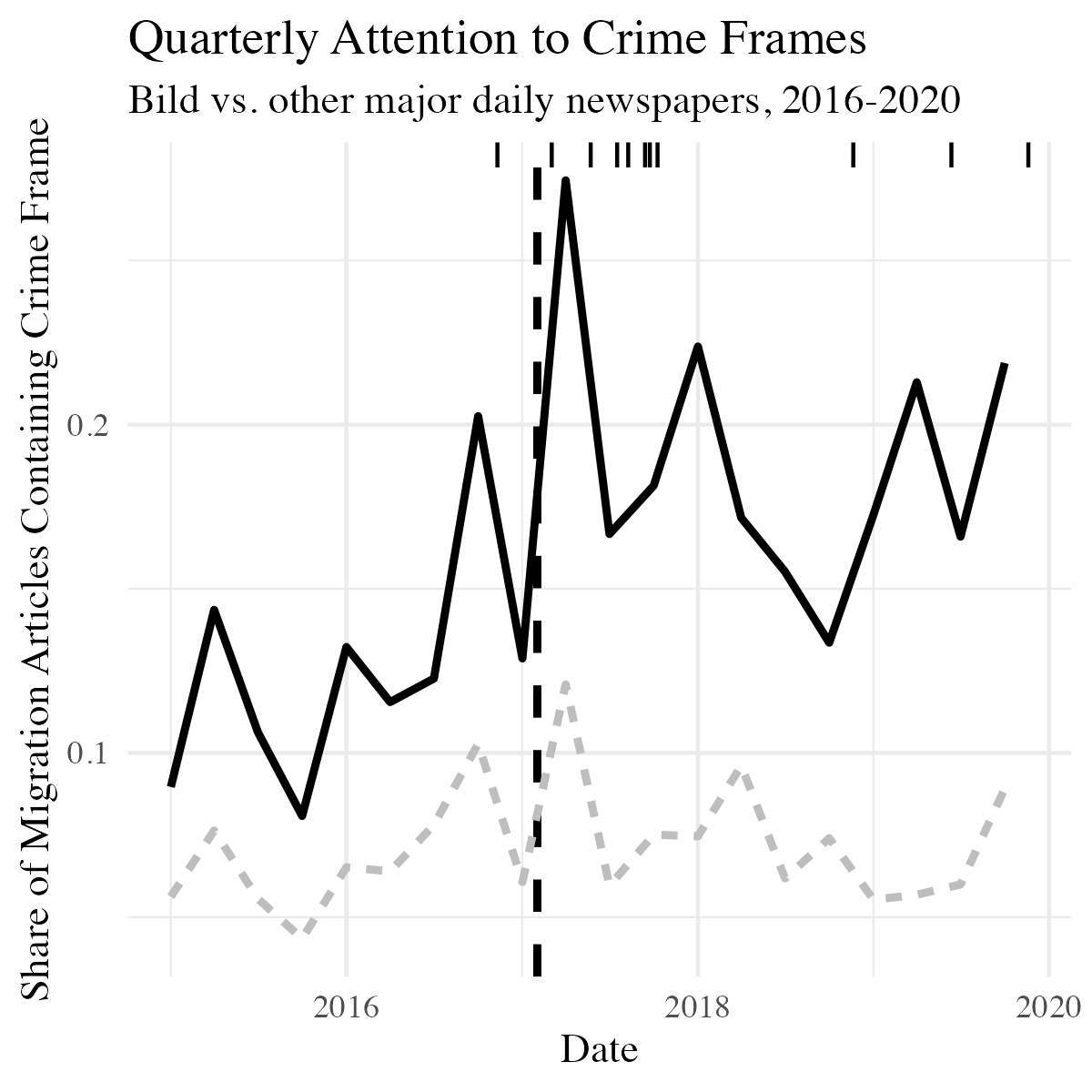
Leveraging large-scale panel data from ~15,000 respondents in the excellent German Longitudinal Election Study Panel, I examine whether this stark shift affected readers’ immigration attitudes. The surprising result: attitudes toward immigration and related variables remained unchanged.
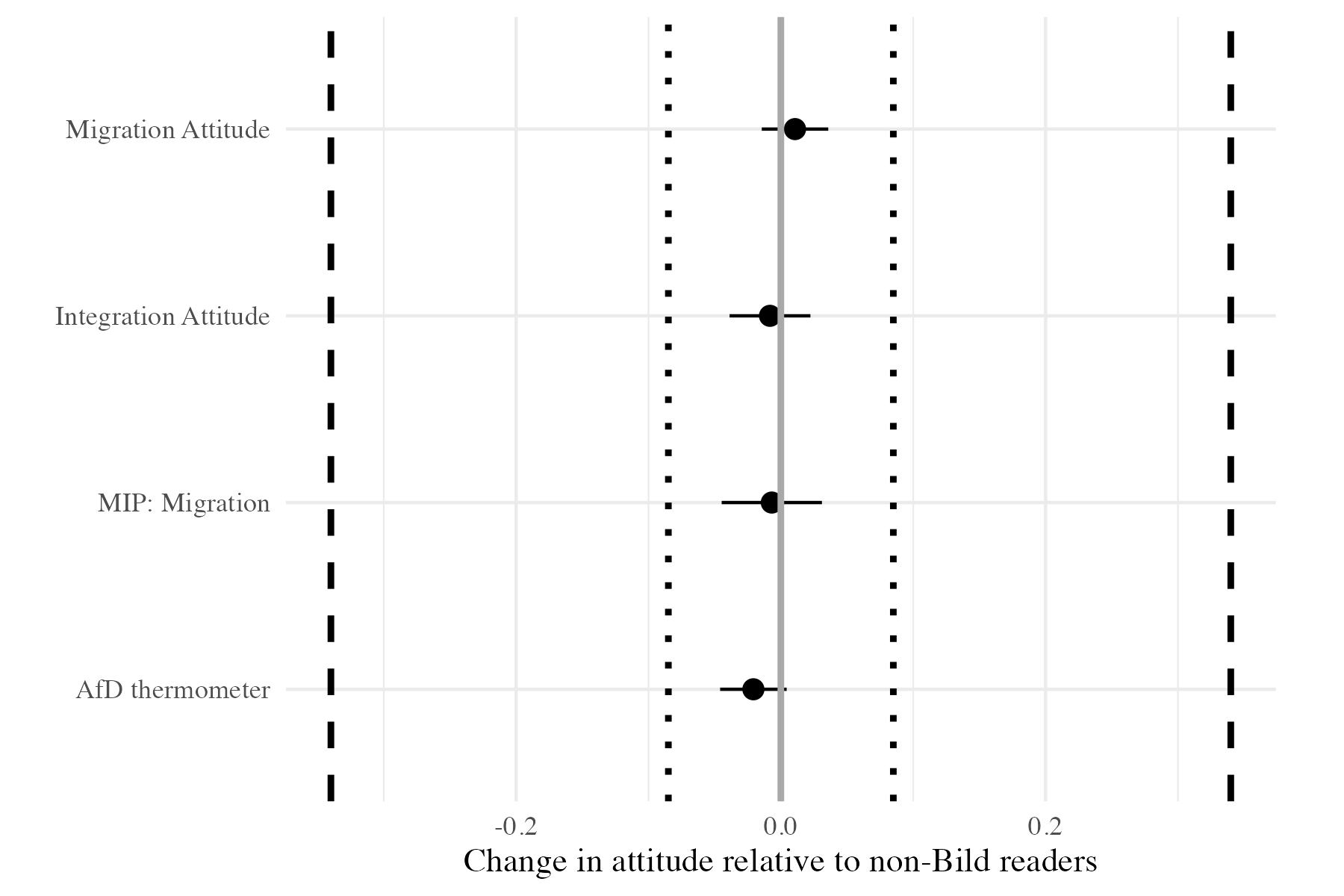
I rule out alternative explanations, such as readers abandoning the tabloid after the editorial shift. Instead, I find that immigration attitudes became much less volatile following the 2015 refugee crisis. I argue that these ‘crystallized’ attitudes are less susceptible to shifts in media framing.
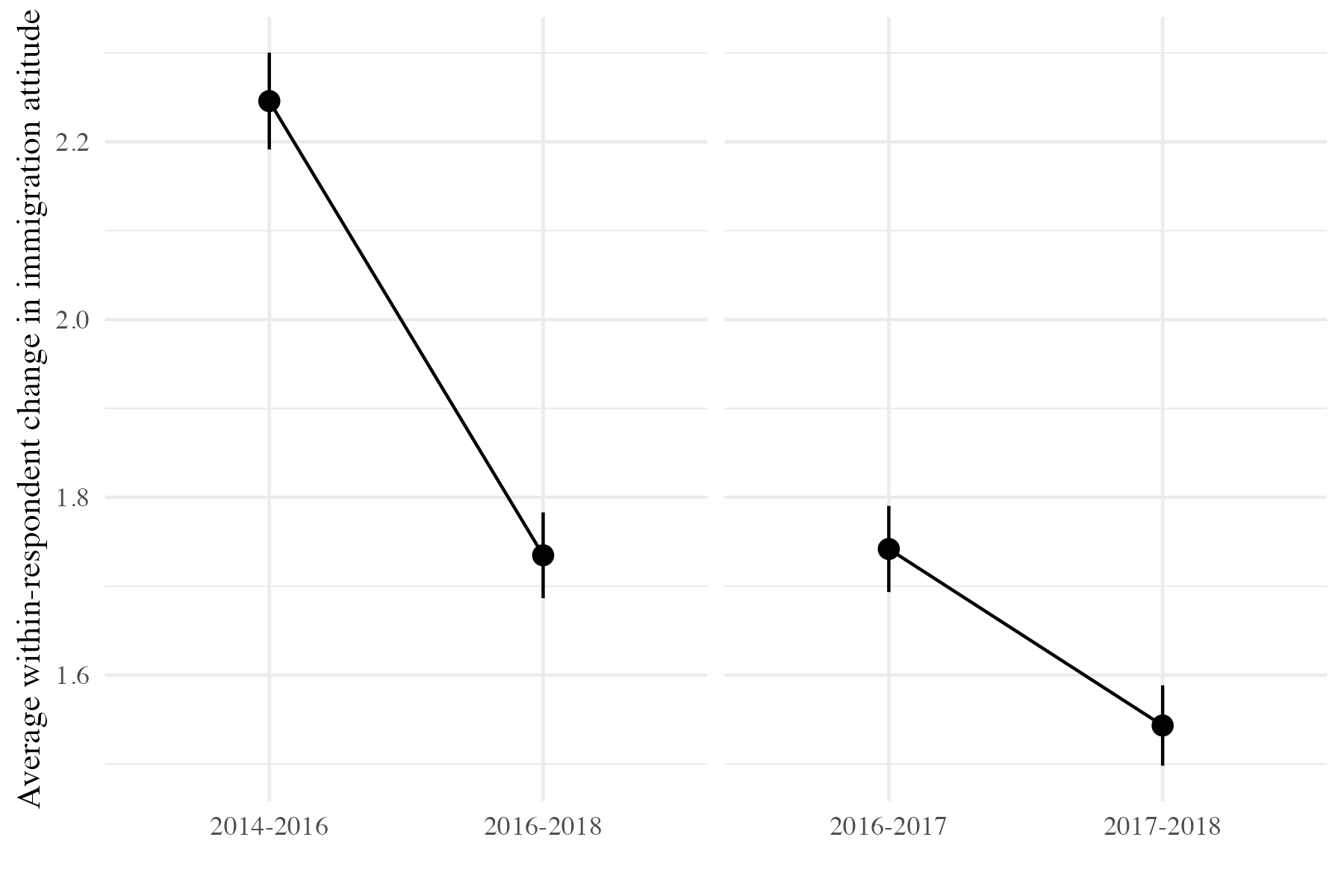
Takeaway: News content does not always influence public attitudes. Framing effects appear most impactful during the early formation of opinions.
Full replication materials are available on Harvard Dataverse.